![{[setting('site_name')]}](https://projxnews.com/uploads/setting/16983847711140531930.webp)
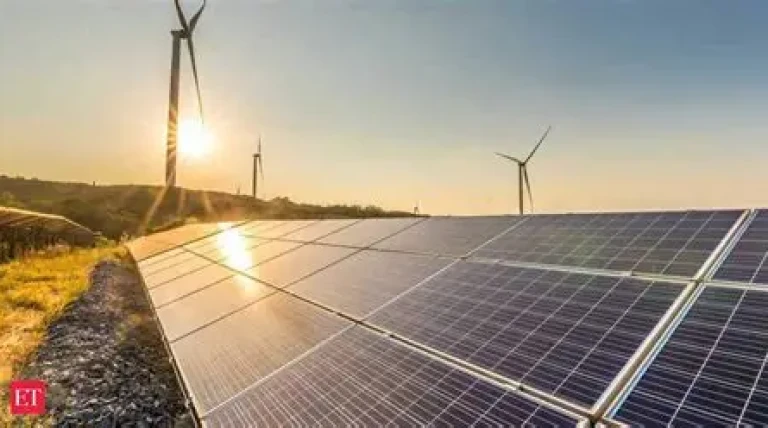

The Central Electricity Authority has released a transmission plan to integrate over 900 GW of non-fossil fuel capacity by 2035–36, supporting India’s renewable energy (RE) targets.
The plan details the network expansion needed to accommodate growing renewable capacity and serves as a reference for regulators and state utilities. It estimates an investment of ₹7.93 lakh crore for developing 1,37,500 circuit-kilometres of transmission lines and 8,27,600 MVA of substation capacity between 2026–27 and 2035–36. The total planned renewable capacity exceeds the projected 786 GW by 115 GW, factoring in potential delays in transmission execution. The plan also includes 19 GW of capacity currently on hold due to high RE costs, such as the Ladakh solar corridor.
Under the Green Energy Corridor-III (GEC-III), 1,34,726 MW of intra-state renewable energy across 13 states will be integrated, with major contributions from Maharashtra, Karnataka, and Telangana.
The plan also identifies the need for Rajasthan to expand HVDC capacity by 60 GW to meet growing RE demand. This will be achieved through ten HVDC corridors, each rated at 6 GW, scheduled for phased completion by 2035–36. Execution of these projects will require land acquisition, right-of-way approvals, and deployment of HVDC terminals.
News by Rahul Yelligetti.