![{[setting('site_name')]}](https://projxnews.com/uploads/setting/16983847711140531930.webp)
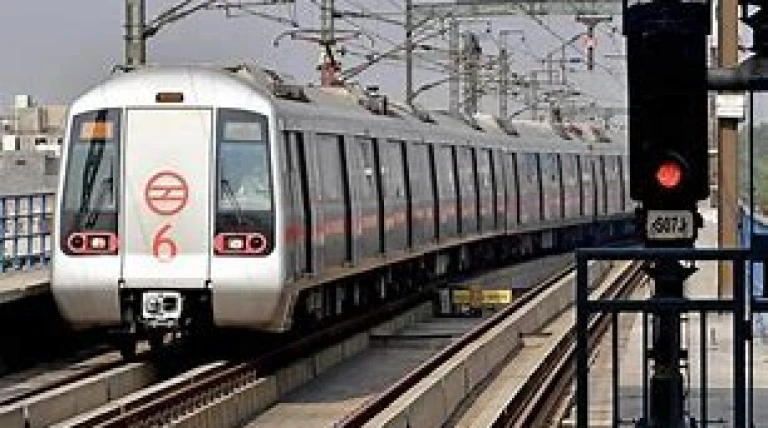

Delhi Chief Minister Rekha Gupta is set to unveil Phase V(b) of the Delhi Metro, a major expansion plan that will add 97 km of new lines across seven corridors and 65 stations. The project aims to extend rapid transit access to outer parts of the city, significantly improving connectivity.
The proposed corridors will link several key routes, including Central Secretariat–Kishangarh, Najafgarh–Nangloi, and Samaypur Badli–Narela, bringing far northern and western areas into the Metro network. Additional lines such as Kirti Nagar–Palam, Jor Bagh–Mithapur, Shastri Park–Mayur Vihar Phase III, and Keshavpuram–Rohini Sector 34 are expected to enhance connectivity across West, South, and East Delhi.
Currently in the planning stage, the project focuses on improving last-mile connectivity and reducing travel time in densely populated and underserved areas like Najafgarh, Narela, Badarpur, Kondli, Geeta Colony, and Gandhi Nagar. The total estimated cost stands at ₹48,204.56 crore, with most of the investment concentrated in the first six corridors.
Among the priority stretches, the Dhansa Bus Stand–Nangloi corridor will be taken up first. Spanning 11.9 km and fully elevated, it will feature nine stations and provide interchanges with existing lines at Nangloi and Dhansa Bus Stand.
Another key route, Central Secretariat–Kishangarh, will run 15.9 km, mostly underground, connecting important hubs such as RK Puram, JNU, and the Prime Ministers’ Museum, with multiple interchange points across major Metro lines.
Other planned corridors include the fully elevated Samaypur Badli–Narela line (12.9 km), the partly underground Kirti Nagar–Palam stretch (9.9 km), and the 17 km Jor Bagh–Mithapur route with several underground sections. The Shastri Park–Mayur Vihar Phase III and Keshavpuram–Rohini Sector 34 corridors will further strengthen east and northwest connectivity.
The Chief Minister described the expansion as an ambitious step toward linking densely populated neighborhoods and offering faster, safer, and more convenient travel options. Four corridors have been identified as priority projects, targeted for completion by 2029, while the remaining three will be developed in phases. The Delhi Metro Rail Corporation has been directed to submit revised detailed project reports.
Once completed, Phase V(b) is expected to significantly strengthen Delhi’s rapid transit network, improve last-mile connectivity, and support sustainable urban development.
News by Rahul Yelligetti.